

In today’s industrial environment, accurate temperature monitoring is essential for maintaining process efficiency, operational safety, and product quality. Industries such as oil & gas, chemical processing, pharmaceuticals, power generation, food manufacturing, water treatment, and steel plants rely heavily on precise temperature measurement systems to ensure smooth operations and prevent equipment failures.
Among the most widely used industrial temperature sensors, Thermocouples stand out for their durability, fast response time, wide temperature range, and cost-effective operation. These temperature sensing devices are capable of performing reliably in harsh industrial conditions including high pressure, vibration, corrosive environments, and extreme temperatures.
As industries continue to automate and optimize their processes, thermocouples remain one of the most important components in industrial instrumentation and process control systems.
As a trusted industrial automation and instrumentation company in India, IPS Automation provides reliable temperature sensing, thermowell, and industrial automation solutions for process industries across India.
What is a Thermocouple?
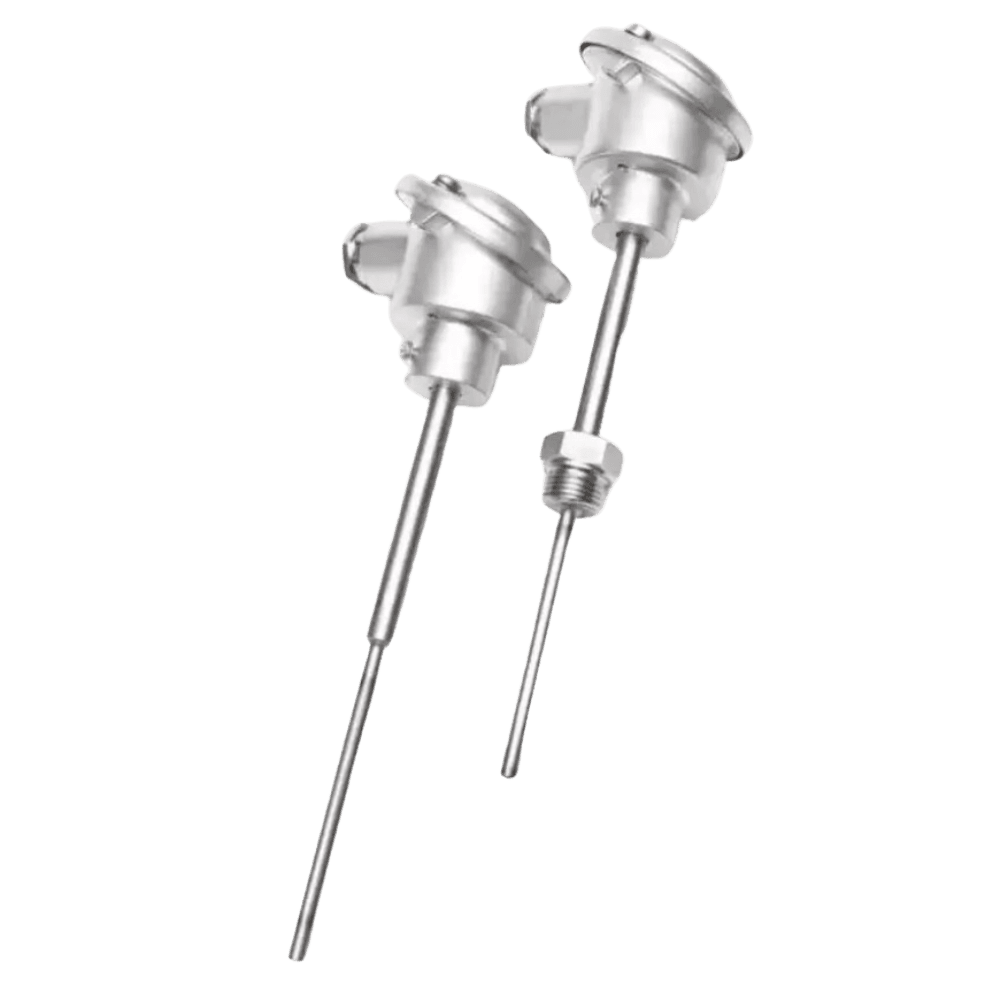
A Thermocouple is a temperature measurement device made by joining two dissimilar metal wires together at one end. When the junction experiences a temperature change, it generates a small electrical voltage proportional to the temperature difference.
This voltage signal is measured and converted into a temperature reading by controllers, indicators, PLC systems, or industrial automation systems.
Thermocouples are widely preferred because they are:
- Simple in construction
- Highly durable
- Cost-effective
- Suitable for extreme temperatures
- Capable of fast response times
Their versatility makes them ideal for industrial process monitoring and automation applications.
How Does a Thermocouple Work?
Thermocouples work based on the Seebeck Effect, where two different metals generate voltage when exposed to varying temperatures.
When the sensing junction is heated or cooled, a voltage is produced between the two metal wires. This voltage is directly related to the temperature difference between the sensing junction and the reference junction.
Basic Working Principle of a Thermocouple
| Component | Function |
|---|---|
| Sensing Junction | Detects temperature changes |
| Dissimilar Metal Wires | Generate electrical voltage |
| Signal Transmission | Sends voltage signal to control systems |
| Temperature Indicator | Converts signal into readable temperature |
This simple working principle allows thermocouples to provide highly reliable temperature measurements in industrial systems.
Types of Thermocouples
Different thermocouple types are designed for different temperature ranges and industrial environments.
| Thermocouple Type | Temperature Range | Common Applications |
|---|---|---|
| Type K | Wide temperature range | General industrial processes |
| Type J | Moderate temperature applications | Industrial machinery |
| Type T | Low-temperature applications | Food processing and laboratories |
| Type R | Extremely high temperatures | Furnaces and kilns |
| Type S | High-temperature precision applications | Glass and steel industries |
| Type N | Improved stability at high temperatures | Power plants and petrochemicals |
Selecting the correct thermocouple type is important for ensuring measurement accuracy and long-term performance.
Advantages of Thermocouples
Thermocouples offer several benefits that make them one of the most preferred industrial temperature sensors.
Wide Temperature Measurement Range
Thermocouples can measure temperatures ranging from extremely low to very high levels, making them suitable for demanding industrial environments.
Fast Response Time
They respond quickly to temperature changes, helping improve process control and operational efficiency.
Durable Construction
Thermocouples can operate reliably under vibration, pressure, moisture, and corrosive conditions.
Cost-Effective Temperature Monitoring
Compared to many other temperature sensors, thermocouples provide excellent performance at an affordable cost.
Compact and Easy Installation
Their compact design allows easy installation in tanks, pipelines, boilers, reactors, and industrial machinery.
Industrial Applications of Thermocouples
Thermocouples are used across a wide range of industries where temperature monitoring is critical.
Oil & Gas Industry
Thermocouples are used for monitoring refinery equipment, storage tanks, pipelines, furnaces, and process heating systems.
Chemical Processing Plants
Chemical industries rely on thermocouples for temperature control in reactors, mixers, storage systems, and processing units.
Power Generation Plants
Power plants use thermocouples for monitoring turbines, boilers, heat exchangers, and steam systems.
Food & Beverage Industry
Thermocouples help maintain accurate processing and storage temperatures to ensure food quality and safety.
Pharmaceutical Industry
Pharmaceutical manufacturing requires precise temperature control for sterile production environments and sensitive formulations.
Steel and Metal Industries
High-temperature thermocouples are widely used in furnaces, kilns, and molten metal processing systems.
Water Treatment Plants
Thermocouples support process temperature monitoring in water and wastewater treatment operations.
Importance of Thermowells in Thermocouple Protection
In industrial applications, thermocouples are often installed inside Thermowells for protection against harsh operating conditions.
A Thermowell is a protective fitting that isolates the temperature sensor from direct exposure to pressure, corrosive fluids, vibration, and flow velocity.
Using thermowells offers several advantages:
- Protects thermocouples from damage
- Increases sensor lifespan
- Allows sensor replacement without process shutdown
- Improves operational safety
- Reduces maintenance costs
IPS Automation provides durable thermowell solutions suitable for industrial temperature sensing applications across India.
Factors to Consider When Selecting a Thermocouple
Choosing the correct thermocouple is important for ensuring reliable and accurate temperature monitoring.
Temperature Range
The selected thermocouple must support the required operating temperature range.
Environmental Conditions
Factors such as moisture, corrosion, pressure, and vibration should be considered before selecting sensor materials.
Accuracy Requirements
Some industrial processes require highly precise temperature measurement for quality control and safety.
Response Time
Fast-response thermocouples are preferred for applications involving rapid temperature fluctuations.
Protective Accessories
Using thermowells and suitable mounting accessories improves sensor durability and reliability.
Common Problems in Thermocouple Systems
Although thermocouples are highly reliable, improper installation or operating conditions can affect performance.
Common Issues Include:
- Sensor drift over time
- Corrosion damage
- Loose electrical connections
- Incorrect thermocouple type selection
- Electrical interference
- Mechanical vibration damage
Regular inspection and proper installation help maintain accurate performance and extend sensor life.
Why Thermocouples are Important in Industrial Automation
Industrial automation systems depend heavily on real-time process monitoring. Thermocouples provide critical temperature data that helps automation systems:
- Improve process efficiency
- Maintain product quality
- Prevent overheating and equipment failure
- Support energy efficiency
- Enhance operational safety
Their compatibility with PLCs, DCS systems, SCADA platforms, and digital controllers makes them essential in modern automation environments.
Why Choose IPS Automation?
IPS Automation is a New Delhi-based industrial automation and instrumentation company specializing in process control and industrial measurement solutions across India.
Products and Solutions Offered
- Thermocouples
- Thermowells
- Pressure Transmitters
- Flow Meters
- Temperature Instruments
- Level Measurement Systems
- Industrial Automation Solutions
IPS Automation focuses on delivering reliable industrial instrumentation products designed for improved operational efficiency, process safety, and long-term system performance.
Conclusion
Thermocouples are among the most reliable and widely used temperature sensing devices in industrial automation systems. Their durability, fast response time, broad temperature range, and cost-effective operation make them suitable for various industrial applications.
From oil & gas and chemical processing to power generation and food manufacturing, thermocouples help industries maintain accurate temperature control, improve safety, and optimize operational performance.
With expertise in industrial automation and process instrumentation, IPS Automation provides dependable thermocouple and thermowell solutions tailored to industrial applications across India. Choosing the right thermocouple system helps industries achieve accurate monitoring, improved efficiency, and reliable long-term performance.