

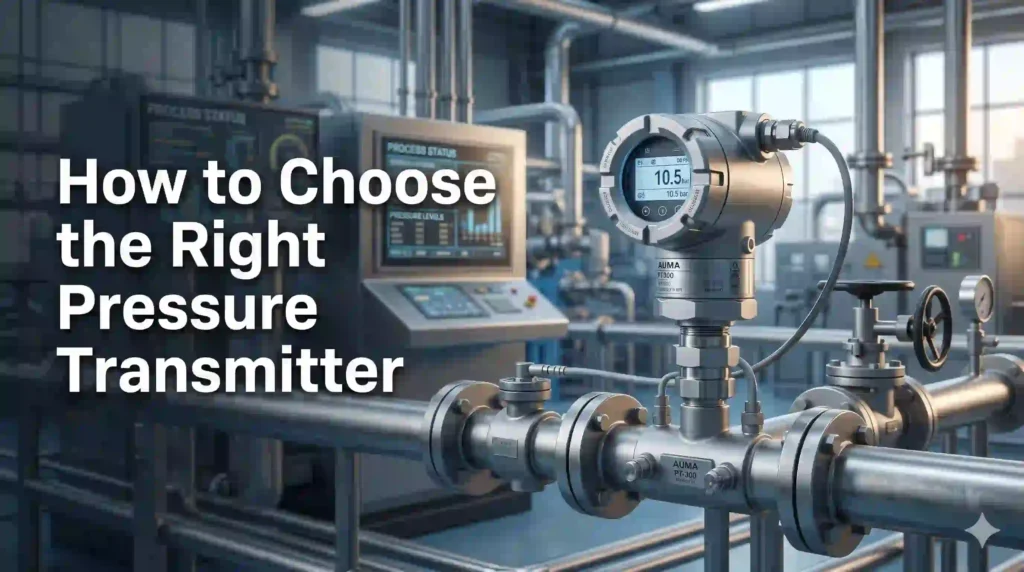
Pressure transmitters play a critical role in industrial automation and monitoring systems. From oil and gas plants to food processing industries, these devices help maintain operational safety, efficiency, and process accuracy. However, choosing the right pressure transmitter is not always straightforward. Different industries require different specifications, and selecting the wrong device can lead to inaccurate readings, equipment failure, or increased maintenance costs.
This guide explains the key factors to consider when selecting the right pressure transmitter for your application.
What Is a Pressure Transmitter?
A pressure transmitter is an industrial device used to measure the pressure of gases, liquids, or steam and convert it into an electrical signal for monitoring and control systems. These signals are transmitted to PLCs, SCADA systems, or control panels for real-time process management.
Pressure transmitters are widely used in industries such as:
- Chemical processing
- Water treatment
- Oil and gas
- Pharmaceuticals
- Food and beverage
- HVAC systems
- Power plants
Selecting the correct transmitter ensures reliable performance and accurate process control.
Understand Your Application Requirements
The first step in How to Choose the Right Pressure Transmitter is understanding the specific application. Every industrial environment has unique operating conditions.
Ask the following questions:
- What type of media will be measured?
- Is the process liquid, gas, or steam?
- What is the operating pressure range?
- What is the process temperature?
- Is the environment corrosive or hazardous?
For example, a food processing plant may require sanitary-grade transmitters, while chemical industries may need corrosion-resistant materials.
Proper evaluation of the application helps avoid compatibility issues and improves long-term performance.
How to Choose the Right Pressure Transmitter
Pressure transmitters are designed to operate within specific pressure ranges. Selecting the correct range is essential for accurate readings and equipment protection.
If the pressure range is too high:
- Measurement accuracy decreases.
If the pressure range is too low:
- The transmitter may become damaged due to overpressure conditions.
A common recommendation is to select a pressure transmitter where the normal operating pressure falls between 30% and 70% of the transmitter’s full-scale range.
This ensures better accuracy and longer device lifespan.
Consider the Type of Pressure Measurement
There are different types of pressure measurements, and each serves a specific purpose.
Gauge Pressure
Measures pressure relative to atmospheric pressure. Commonly used in pumps and compressors.
Absolute Pressure
Measures pressure relative to a perfect vacuum. Often used in laboratory and vacuum applications.
Differential Pressure
Measures the difference between two pressure points. Widely used in filtration systems and flow measurement applications.
Understanding the measurement type is important before finalizing a pressure transmitter.
Material Compatibility Matters
The wetted parts of the pressure transmitter come into direct contact with the process media. Therefore, material compatibility is extremely important.
Common materials include:
- Stainless steel
- Hastelloy
- Ceramic
- Titanium
For corrosive chemicals, stainless steel may not be sufficient. In such cases, specialized materials like Hastelloy are preferred.
Incorrect material selection can lead to corrosion, leakage, and system failure.
Evaluate Accuracy Requirements
Different industries require different levels of measurement accuracy.
For choosing How to Choose the Right Pressure Transmitter
For example:
- General industrial processes may require ±0.5% accuracy.
- Pharmaceutical and laboratory applications may require much higher precision.
Higher accuracy transmitters are usually more expensive, so it is important to choose based on actual operational needs rather than over-specifying.
Accurate measurement improves process efficiency and reduces operational errors.
Check Output Signal Compatibility
Pressure transmitters provide output signals that communicate with control systems. The most common output signals are:
- 4–20 mA
- HART communication
- Modbus
- Fieldbus
Before purchasing a transmitter, ensure compatibility with your existing automation system.
Modern Process Instrumentation systems often prefer smart transmitters with digital communication protocols for advanced diagnostics and remote monitoring.
Temperature and Environmental Conditions
Industrial environments can be harsh. Temperature, humidity, vibration, and dust can affect transmitter performance.
Consider the following environmental factors:
- Ambient temperature
- Process temperature
- Vibration levels
- Outdoor or indoor installation
- Presence of moisture or dust
For extreme environments, choose transmitters with proper IP ratings and rugged construction.
Hazardous locations may also require explosion-proof or intrinsically safe certifications.
Installation Requirements
Installation conditions also influence transmitter selection.
Factors to consider include:
- Pipe size and connection type
- Mounting orientation
- Space availability
- Electrical connections
Common connection types include:
- Threaded connections
- Flanged connections
- Sanitary fittings
Selecting the correct mounting and connection options ensures easy installation and maintenance.
Certifications and Industry Standards
Many industries require certified pressure transmitters to comply with safety and quality regulations.
Important certifications may include:
- ATEX
- IECEx
- CE
- UL
- FDA approvals
For industries such as pharmaceuticals, food processing, and oil & gas, compliance with industry standards is essential.
Always verify certification requirements before purchase.
Maintenance and Long-Term Reliability
A pressure transmitter should provide stable performance over a long period with minimal maintenance.
When comparing products, consider:
- Calibration stability
- Ease of maintenance
- Availability of spare parts
- Manufacturer support
- Warranty coverage
Reliable transmitters reduce downtime and maintenance costs.
Choosing trusted brands and quality Process Instrumentation solutions can significantly improve operational reliability.
Smart Features and Digital Diagnostics
Modern pressure transmitters come with advanced smart features that improve process monitoring and troubleshooting.
Popular features include:
- Remote configuration
- Self-diagnostics
- Wireless connectivity
- Predictive maintenance alerts
These features help industries reduce manual inspections and improve overall efficiency.
As industrial automation continues to grow, smart transmitters are becoming the preferred choice for advanced monitoring systems.
Cost vs Performance
Price should never be the only deciding factor when selecting a pressure transmitter.
Low-cost devices may initially save money but can lead to:
- Frequent failures
- Poor accuracy
- Increased maintenance
- Process downtime
Instead, focus on overall value, reliability, and compatibility with your process requirements.
A well-selected transmitter offers better performance and lower operational costs over time.
Choosing the right pressure transmitter requires careful evaluation of application needs, pressure range, material compatibility, accuracy, environmental conditions, and communication protocols.
A properly selected transmitter improves process efficiency, ensures safety, and minimizes downtime. Whether you operate in manufacturing, water treatment, pharmaceuticals, or oil and gas, investing in the right solution is essential for long-term operational success.
Before purchasing, always consult experienced suppliers or automation experts to ensure the transmitter matches your exact industrial requirements.