

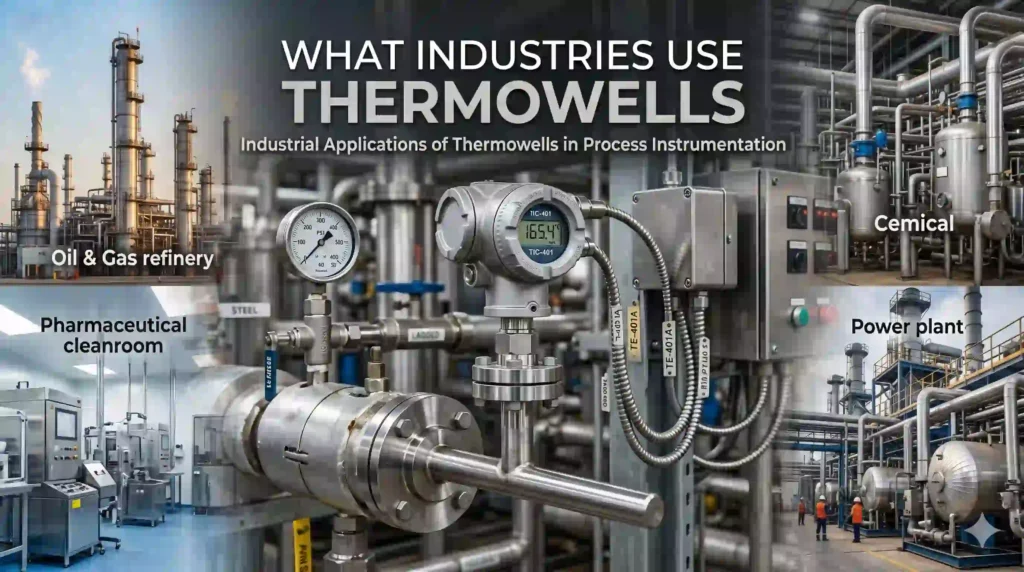
In industrial process systems, accurate temperature measurement is critical for safety, efficiency, and product quality. However, temperature sensors operating directly inside pipelines, reactors, boilers, or chemical vessels are often exposed to high pressure, corrosive fluids, vibration, and extreme temperatures. This is where thermowells play an essential role.
Thermowells are protective fittings designed to shield temperature sensors such as RTDs, thermocouples, and temperature transmitters from harsh operating environments. They allow sensors to measure process temperature safely without direct exposure to the media flowing through the system.
Many industries rely on industrial thermowells to improve equipment reliability, reduce maintenance costs, and ensure uninterrupted industrial temperature measurement. From oil refineries and power plants to pharmaceutical manufacturing and semiconductor facilities, thermowell applications are found wherever process temperature monitoring is important.
In this article, we will explore what industries use thermowells, why they are essential in process instrumentation, and how they support safe and reliable industrial operations.
What Is a Thermowell?
A thermowell is a cylindrical protective tube installed into industrial pipelines, tanks, vessels, or process equipment to house temperature sensors. Instead of placing the sensor directly into the process media, the sensor is inserted into the thermowell.
This arrangement protects the sensing element from:
- High process pressure
- Corrosive chemicals
- Abrasive flow conditions
- Mechanical stress
- High flow velocity
- Extreme temperatures
Thermowells are commonly used with:
- RTDs
- Thermocouples
- Temperature transmitters
- Industrial thermometers
- Process instrumentation systems
In industrial applications, thermowells are manufactured using materials such as stainless steel, Hastelloy, Monel, and other corrosion-resistant alloys depending on process requirements.
Why Industries Use Thermowells
Protection from Pressure and Flow
Industrial pipelines often operate under high pressure and turbulent flow conditions. Directly exposing a temperature sensor to these environments can damage the sensing element. Thermowells create a protective barrier between the sensor and the process media.
Corrosion Resistance
Chemical exposure can quickly deteriorate unprotected sensors. Thermowells made from corrosion-resistant materials help extend sensor life in aggressive industrial environments.
Sensor Safety and Easy Replacement
One major advantage of thermowell uses in industries is maintenance convenience. Sensors can be removed or replaced without shutting down the entire process line. This minimizes downtime and improves operational efficiency.
High-Temperature Applications
Industrial furnaces, boilers, reactors, and steam systems often operate at elevated temperatures. Thermowells protect sensors from thermal stress and excessive heat exposure.
Improved Process Reliability
Accurate industrial temperature measurement is essential for process stability. Thermowells help maintain reliable sensor performance even in demanding operating conditions.
What Industries Use Thermowells?
Thermowells are widely used across multiple industrial sectors where reliable temperature monitoring is essential for process control and safety.
Oil and Gas Industry
The oil and gas sector is one of the largest users of industrial thermowells. Temperature monitoring is critical during drilling, refining, transportation, and storage operations.
Thermowell applications in oil and gas include:
- Crude oil processing
- Refinery pipelines
- Offshore platforms
- LNG systems
- Gas compressors
- Heat exchangers
- Storage tanks
In these environments, thermowells protect RTDs and thermocouples from high-pressure hydrocarbons, corrosive chemicals, and extreme process temperatures.
Chemical and Petrochemical Plants
Chemical processing facilities handle aggressive fluids, solvents, acids, and hazardous chemicals. Temperature control is crucial for reaction stability and product quality.
Thermowell uses in industries such as petrochemicals include:
- Chemical reactors
- Distillation columns
- Mixing tanks
- Steam lines
- Polymer production systems
Corrosion-resistant thermowells help ensure long-term sensor protection in chemically aggressive conditions.
Pharmaceutical Manufacturing
The pharmaceutical industry requires precise temperature control to maintain product consistency and regulatory compliance.
Thermowells are used in:
- Sterilization systems
- Clean process piping
- Bioreactors
- Water purification systems
- Batch processing units
Sanitary-grade thermowells help maintain hygienic conditions while protecting temperature sensors from contamination and frequent washdowns.
Food and Beverage Industry
Food processing operations rely heavily on accurate temperature monitoring for product quality and food safety.
Common thermowell applications include:
- Dairy processing
- Beverage production
- Brewing systems
- Pasteurization units
- Commercial cooking equipment
- Refrigeration systems
Stainless steel thermowells are widely preferred because they offer corrosion resistance and easy cleaning.
Power Generation Plants
Power plants operate under high-temperature and high-pressure conditions, making thermowells essential for process instrumentation.
Applications include:
- Boilers
- Steam turbines
- Condensers
- Cooling water systems
- Heat recovery systems
Thermowells protect temperature transmitters and thermocouples from steam pressure, vibration, and thermal stress.
Water and Wastewater Treatment
Water treatment facilities use thermowells to monitor process temperatures in pumping stations, filtration systems, and treatment units.
Typical applications include:
- Water purification systems
- Sludge treatment
- Chemical dosing systems
- Industrial wastewater processing
Thermowells improve sensor durability in wet and chemically exposed environments.
HVAC and Boiler Systems
HVAC systems require continuous temperature monitoring for energy efficiency and operational control.
Thermowells are commonly installed in:
- Chillers
- Hot water systems
- Boilers
- Air handling units
- Industrial cooling systems
They allow safe installation and replacement of temperature sensors without interrupting system operation.
Steel and Heavy Engineering
Steel manufacturing involves extremely high process temperatures and harsh operating conditions.
Thermowells are used in:
- Blast furnaces
- Metal heat treatment
- Rolling mills
- Molten metal processing
- Industrial ovens
Heavy-duty thermowells protect sensors from heat, vibration, and abrasive environments.
Semiconductor and Clean Room Applications
Semiconductor manufacturing requires highly controlled environments with stable temperature conditions.
Thermowell applications include:
- Clean room HVAC systems
- Chemical delivery systems
- Semiconductor processing equipment
- Precision manufacturing units
Reliable temperature measurement helps maintain process accuracy and product quality.
Paper and Pulp Industry
Paper mills use thermowells in several stages of pulp processing and paper production.
Applications include:
- Drying cylinders
- Chemical recovery systems
- Steam pipelines
- Pulp digesters
- Boiler systems
Industrial thermowells help maintain accurate temperature monitoring in humid and chemically exposed environments.
Thermowells and Modern Process Instrumentation
Modern industries increasingly rely on integrated process instrumentation systems for automation and efficiency. Thermowells work alongside:
- RTDs
- Thermocouples
- Temperature transmitters
- Pressure transmitters
- Flow meters
- PLC and DCS systems
These components together support accurate monitoring, process optimization, and industrial safety.
Companies like IPS Automation provide thermowells and advanced process instrumentation solutions for diverse industrial applications including oil and gas, pharmaceuticals, water treatment, semiconductor manufacturing, paper processing, and power generation.
Conclusion
Understanding what industries use thermowells helps highlight their importance in modern industrial operations. From chemical plants and power stations to pharmaceutical facilities and HVAC systems, thermowells play a critical role in protecting temperature sensors and ensuring accurate industrial temperature measurement.
Their ability to provide temperature sensor protection in high-pressure, corrosive, and high-temperature environments makes them essential for safe and reliable process instrumentation.
As industries continue to focus on automation, efficiency, and process reliability, the demand for high-quality industrial thermowells will continue to grow.
If you are looking for reliable thermowells, RTDs, thermocouples, temperature transmitters, and complete process instrumentation solutions, contact IPS Automation for industry-specific support and advanced industrial automation products.