

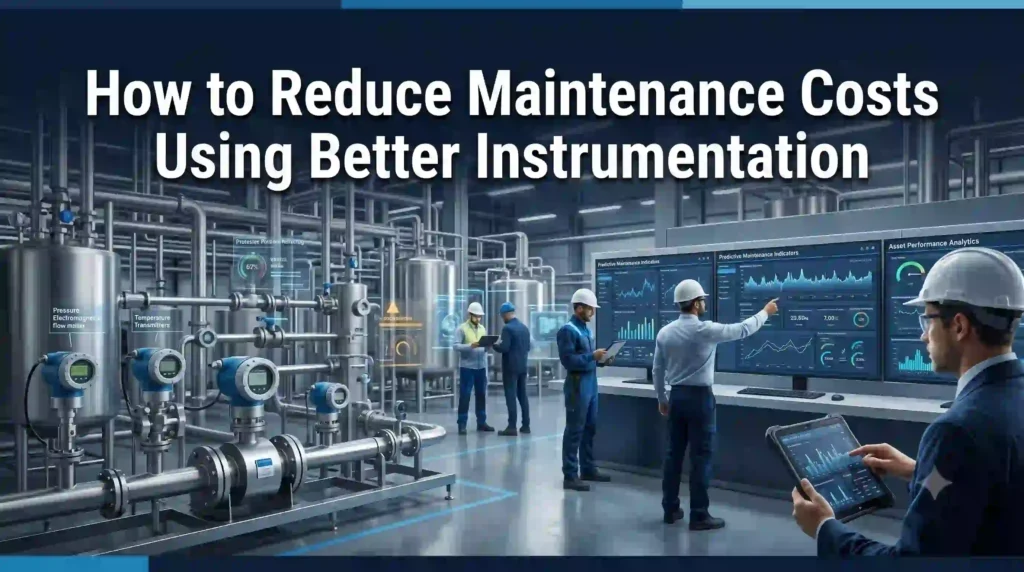
Industrial maintenance costs are increasing rapidly across manufacturing facilities, processing plants, and utility industries. Unexpected equipment failures, production downtime, inaccurate monitoring systems, and inefficient maintenance practices can significantly affect profitability and operational efficiency.
Many industries focus heavily on machinery upgrades to improve productivity, but often overlook one critical factor that directly impacts maintenance expenses — process instrumentation. Modern industrial instrumentation plays a major role in reducing equipment failures, improving process visibility, and enabling predictive maintenance strategies.
From pressure transmitters and flow meters to temperature transmitters and analytical instruments, advanced instrumentation solutions help industries monitor operations in real time and prevent costly breakdowns before they occur.
In this article, we explore how better process instrumentation helps industries reduce maintenance costs, improve plant reliability, and achieve higher operational efficiency.
Why Maintenance Costs Are Increasing in Industries
Industrial facilities today operate under continuous production pressure. However, many plants still rely on outdated monitoring systems, manual inspections, or low-accuracy instruments. These limitations often lead to increased maintenance expenses and operational inefficiencies.
Unexpected Equipment Breakdowns
Unplanned equipment failures are one of the biggest contributors to maintenance costs. Without accurate process monitoring, industries struggle to identify abnormal conditions before equipment damage occurs.
For example:
- Pressure fluctuations may damage pipelines and pumps
- Overheating can reduce motor lifespan
- Incorrect flow readings can impact production quality
- Tank overflows can create operational and safety hazards
Emergency repairs are always more expensive than preventive maintenance.
Manual Monitoring Errors
Manual inspection methods depend heavily on human observation and periodic checking. Important process changes may go unnoticed between inspections, leading to delayed corrective actions.
Inaccurate manual monitoring also increases the risk of process instability and unnecessary maintenance work.
Lack of Real-Time Process Data
Many industrial facilities lack continuous monitoring systems that provide real-time operational insights.
Without live process data:
- Equipment performance issues remain hidden
- Maintenance becomes reactive instead of preventive
- Production efficiency decreases
- Downtime risks increase
Modern industrial automation solutions solve this challenge through continuous industrial process monitoring.
Sensor Failures and Inaccurate Measurements
Old or low-quality sensors often produce inaccurate readings, which can affect process stability and equipment performance.
Inaccurate instrumentation may result in:
- Product losses
- Equipment stress
- Energy wastage
- Increased maintenance frequency
- Process instability
Reliable industrial instrumentation is essential for maintaining operational accuracy and equipment protection.
Reactive Maintenance Practices
Many industries still follow reactive maintenance strategies, where repairs happen only after failures occur.
Reactive maintenance typically causes:
- Frequent breakdowns
- Higher labor costs
- Increased spare part usage
- Longer production downtime
- Reduced equipment lifespan
Preventive and predictive maintenance approaches are significantly more cost-effective.
Role of Better Instrumentation in Reducing Maintenance Costs
Modern process instrumentation helps industries monitor, analyze, and optimize industrial operations more effectively.
Improved Process Visibility
Advanced industrial monitoring systems provide continuous visibility into critical process conditions such as:
- Pressure
- Temperature
- Flow
- Level
- Chemical composition
This allows operators and maintenance teams to detect abnormalities early and take corrective action before failures occur.
Real-Time Monitoring
Smart instrumentation continuously tracks equipment performance and process conditions in real time.
When integrated with PLC, SCADA, or DCS systems, industrial instruments can instantly trigger alarms whenever process values exceed safe operating limits.
This helps industries avoid:
- Equipment damage
- Process interruptions
- Product losses
- Safety incidents
Equipment Protection
Accurate instrumentation protects valuable industrial equipment from unsafe operating conditions.
For example:
- Pressure transmitters prevent overpressure conditions
- Temperature transmitters prevent overheating
- Flow meters detect blockages and leakage
- Level instruments prevent tank overflow and dry-running pumps
By reducing operational stress on machinery, industries lower repair and replacement costs.
Better Process Stability
Stable industrial processes reduce mechanical wear and improve equipment performance.
Accurate process control minimizes fluctuations, improves product consistency, and reduces unnecessary maintenance activities.
Energy Efficiency
Poor process control often increases energy consumption. Better instrumentation helps optimize energy usage by improving process accuracy and eliminating inefficiencies.
This contributes directly to lower operational costs.
Predictive Maintenance Support
Predictive maintenance instrumentation helps industries identify equipment issues before failures occur.
Continuous monitoring allows maintenance teams to:
- Analyze equipment trends
- Predict component failures
- Schedule maintenance proactively
- Reduce emergency repairs
This improves overall maintenance optimization and plant reliability.
Key Industrial Instruments That Help Reduce Maintenance Expenses
Pressure Transmitters
Pressure transmitters are essential industrial instruments used to measure pressure levels in pipelines, tanks, pumps, and processing systems.
How Pressure Transmitters Reduce Maintenance Costs
Pressure monitoring helps industries:
- Prevent overpressure damage
- Detect blockages early
- Identify pump performance issues
- Improve process safety
- Reduce stress on industrial equipment
Continuous pressure monitoring reduces unexpected failures and improves operational stability.
Industrial Applications
Pressure transmitters are widely used in:
- Oil & Gas industries
- Chemical plants
- Power generation facilities
- Water treatment systems
- Manufacturing industries
IPS Automation provides reliable pressure instruments and pressure transmitters designed for demanding industrial environments.
Flow Meters
Flow meters measure the movement of liquids, gases, and steam through industrial pipelines.
How Flow Meters Reduce Maintenance Costs
Advanced flow instruments help industries:
- Detect leaks quickly
- Prevent dry-running pumps
- Improve resource utilization
- Optimize process efficiency
- Reduce energy waste
Electromagnetic flow meters are especially effective because they contain fewer moving parts, reducing wear and maintenance requirements.
Industrial Applications
Flow meters are commonly used in:
- Water & wastewater treatment
- Pharmaceutical manufacturing
- Chemical processing
- Food industries
- Utility systems
Temperature Transmitters
Temperature transmitters continuously monitor industrial process temperatures and maintain stable operating conditions.
How Temperature Transmitters Reduce Maintenance Problems
Temperature monitoring prevents:
- Equipment overheating
- Thermal stress
- Motor damage
- Boiler failures
- Product quality issues
Maintaining controlled temperatures reduces wear on machinery and improves equipment lifespan.
Industrial Applications
Temperature transmitters are widely used in:
- Boilers
- Heat exchangers
- Furnaces
- HVAC systems
- Manufacturing plants
IPS Automation offers advanced temperature instruments and temperature transmitters for accurate industrial process monitoring.
Level Instruments
Level instruments monitor liquid and solid levels inside industrial tanks, silos, and vessels.
How Level Instruments Reduce Maintenance Costs
Accurate level monitoring helps prevent:
- Tank overflows
- Dry-running pumps
- Material wastage
- Process interruptions
Ultrasonic level transmitters provide non-contact measurement, minimizing sensor wear and reducing maintenance frequency.
Industrial Applications
Level instruments are commonly used in:
- Water treatment facilities
- Chemical storage systems
- Oil storage tanks
- Pharmaceutical processing plants
Analytical Instruments
Analytical instruments measure process parameters such as pH, conductivity, dissolved oxygen, and gas concentration.
How Analytical Instruments Improve Efficiency
These instruments help industries:
- Maintain process quality
- Detect contamination early
- Prevent corrosion
- Optimize chemical dosing
- Improve operational reliability
Continuous analysis improves overall plant performance and reduces maintenance-related failures.
Industrial Applications
Analytical instruments are widely used in:
- Water treatment plants
- Chemical industries
- Pharmaceutical industries
- Food processing facilities
Thermowells
Thermowells protect temperature sensors from high pressure, corrosion, vibration, and harsh industrial environments.
How Thermowells Reduce Maintenance Costs
Thermowells help industries:
- Extend sensor lifespan
- Reduce sensor replacement frequency
- Improve process safety
- Replace sensors without shutting down operations
This minimizes downtime and lowers maintenance expenses.
Industrial Applications
Thermowells are widely used in:
- Refineries
- Petrochemical plants
- Steam systems
- Power plants
Predictive Maintenance Through Smart Instrumentation
Predictive maintenance is transforming industrial maintenance strategies by helping industries detect issues before failures occur.
Smart instrumentation continuously collects operational data and provides valuable insights into equipment performance.
Benefits of Predictive Maintenance Instrumentation
- Continuous process monitoring
- Early fault detection
- Real-time alarms
- Reduced emergency repairs
- Better maintenance planning
- Improved equipment reliability
Integration with PLC, SCADA, and DCS systems enables centralized process monitoring and data-driven maintenance management.
Industries can analyze historical trends to optimize maintenance schedules and improve operational efficiency.
Benefits of Upgrading to Modern Process Instrumentation
Industries that invest in advanced industrial automation solutions gain several long-term operational benefits.
Reduced Downtime
Real-time monitoring minimizes unexpected shutdowns and production interruptions.
Lower Repair Costs
Early detection prevents severe equipment damage and expensive emergency maintenance.
Longer Equipment Life
Stable operating conditions reduce mechanical stress and extend equipment lifespan.
Improved Plant Safety
Accurate instrumentation improves process control and reduces operational risks.
Reduced Manpower Dependency
Automation reduces the need for manual inspections and repetitive monitoring activities.
Better Process Accuracy
High-precision instruments improve production consistency and process quality.
Higher Productivity
Efficient industrial monitoring systems improve plant reliability and operational performance.
Industries Benefiting from Better Instrumentation
Modern industrial instrumentation solutions are essential across multiple industries.
Oil & Gas
Pressure transmitters, flow meters, and analytical instruments improve pipeline safety and operational reliability.
Chemical Industries
Process instrumentation helps maintain accurate chemical dosing, stable temperature control, and safe operations.
Pharmaceuticals
Precise monitoring systems improve product quality and regulatory compliance.
Water & Wastewater
Flow instruments and level transmitters improve water management and reduce maintenance interruptions.
Power Plants
Temperature and pressure monitoring systems protect turbines, boilers, and steam systems.
Manufacturing Industries
Industrial automation solutions improve process consistency, equipment reliability, and operational efficiency.
Why Choose IPS Automation
IPS Automation is a trusted provider of industrial instrumentation and automation solutions for process industries.
The company offers a wide range of solutions including:
- Pressure Instruments
- Temperature Instruments
- Flow Instruments
- Level Instruments
- Analytical Instruments
- Thermowells
- Pressure Transmitters
- Temperature Transmitters
- Electromagnetic Flow Meters
- Ultrasonic Level Transmitters
- PLC/DCS Process Control Solutions
IPS Automation serves industries such as:
- Oil & Gas
- Chemical Industries
- Pharmaceuticals
- Water & Wastewater
- Power Plants
- Manufacturing Industries
With strong technical expertise and reliable support, IPS Automation helps industries improve operational efficiency and reduce long-term maintenance costs.
Conclusion
Reducing industrial maintenance costs requires more than reactive repairs and routine servicing. Modern process instrumentation plays a critical role in improving process visibility, equipment reliability, and operational efficiency.
Advanced industrial instrumentation solutions such as pressure transmitters, flow meters, temperature instruments, analytical systems, and automation platforms help industries detect issues early, reduce downtime, and optimize maintenance activities.
By investing in better instrumentation and predictive maintenance solutions, industries can significantly reduce operational expenses while improving plant safety, productivity, and long-term performance.
Looking to Reduce Industrial Maintenance Costs?
Explore advanced industrial instrumentation and automation solutions from IPS Automation and build a smarter, more reliable industrial operation.
Contact IPS Automation today for expert support on process instrumentation, industrial monitoring systems, pressure transmitters, flow meters, temperature instruments, level instruments, and industrial automation solutions.