

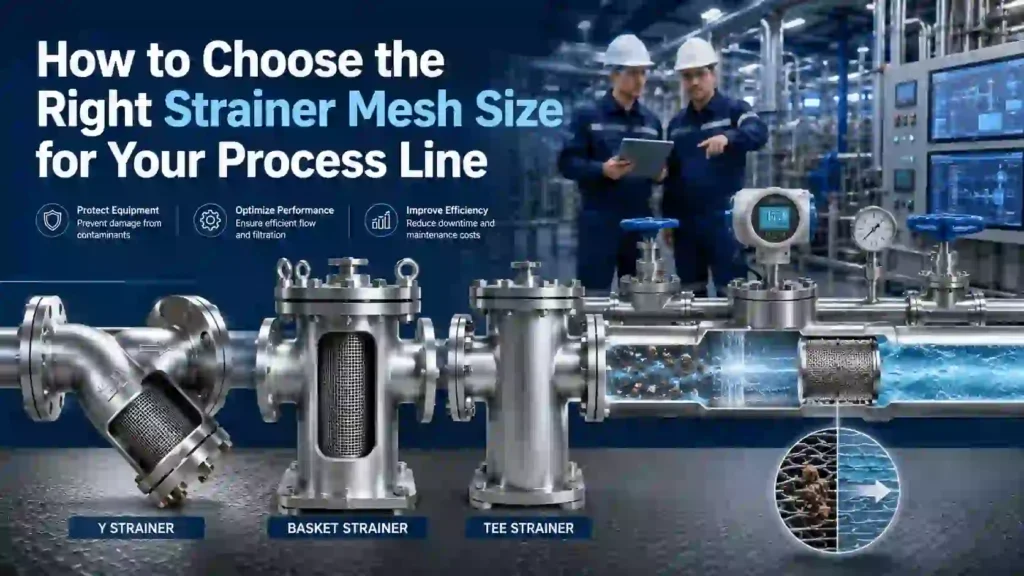
Industrial process lines rely on effective filtration to protect critical equipment, maintain product quality, and ensure uninterrupted operations. Whether handling water, chemicals, oils, steam, or other process media, contaminants can damage pumps, valves, flow meters, and other sensitive components. This is where strainers play a crucial role.
Selecting the correct strainer mesh size is one of the most important decisions in process filtration. The right choice helps prevent equipment failure, reduces maintenance costs, and improves overall process efficiency. As part of modern industrial process solutions, proper mesh selection contributes significantly to operational reliability and long-term system performance.
What Is Strainer Mesh Size?
Strainer mesh size refers to the number of openings per linear inch in a filtration screen. It determines the size of particles that can pass through the strainer.
For example, a 20-mesh screen contains 20 openings per inch, while a 100-mesh screen contains 100 openings per inch. Higher mesh numbers indicate smaller openings and finer filtration.
In general:
- Coarse mesh sizes remove larger debris and contaminants.
- Fine mesh sizes capture smaller particles and provide greater filtration precision.
Understanding how mesh numbers relate to particle size is essential when selecting industrial strainers for specific applications.
Why Choosing the Right Mesh Size Matters
Selecting the appropriate mesh size directly impacts system performance and equipment protection.
Equipment Protection
Proper filtration prevents debris from entering pumps, valves, heat exchangers, and instrumentation systems. This extends equipment life and reduces repair costs.
Process Quality
Consistent filtration helps maintain product purity and process integrity, particularly in industries such as pharmaceuticals, food processing, and chemical manufacturing.
Reduced Downtime
Unplanned shutdowns often occur due to clogged equipment or damaged components. Effective filtration minimizes these risks.
Lower Maintenance Costs
The right strainer mesh size reduces cleaning frequency and component replacement expenses.
Improved Operational Efficiency
Well-designed industrial process solutions rely on balanced filtration that protects equipment without restricting flow unnecessarily.
Key Factors to Consider When Selecting Strainer Mesh Size
1. Type of Contaminants
The size and nature of contaminants should be the first consideration.
Factors include:
- Solid particle size
- Type of debris present
- Required cleanliness level
- Industry-specific process requirements
Larger debris may only require coarse filtration, while sensitive applications demand finer filtration.
2. Fluid Characteristics
The properties of the process fluid influence mesh selection.
Consider:
- Viscosity
- Temperature
- Flow rate
- Chemical compatibility
High-viscosity fluids may experience significant pressure drops when passing through fine mesh screens. Effective industrial process solutions account for these variables to maintain optimal performance.
3. Equipment Being Protected
Different equipment types require varying levels of filtration.
Common equipment requiring protection includes:
- Pumps
- Control valves
- Flow meters
- Heat exchangers
- Process instruments
For example, flow meters and precision instruments often require finer filtration than general pipeline applications. Proper industrial process solutions ensure that filtration levels align with equipment sensitivity.
4. Pressure Drop Considerations
One of the most common filtration challenges is balancing particle removal with flow efficiency.
An excessively fine mesh can:
- Restrict flow
- Increase pressure drop
- Reduce system efficiency
- Require frequent maintenance
Choosing a mesh size that provides adequate protection without compromising performance is critical for successful process filtration systems.
Common Strainer Mesh Size Guidelines
The following table provides general mesh size recommendations for industrial applications:
| Mesh Size | Micron Rating | Typical Application |
| 10 Mesh | Approx. 2000 Microns | Large debris removal |
| 20 Mesh | Approx. 840 Microns | General industrial filtration |
| 40 Mesh | Approx. 420 Microns | Process protection |
| 80 Mesh | Approx. 177 Microns | Fine filtration |
| 100 Mesh | Approx. 149 Microns | Precision applications |
Actual mesh selection should always be based on process conditions and equipment requirements.
Choosing Between Y Strainers, Basket Strainers, and TEE Strainers
Different strainer designs offer unique advantages depending on the application.
Y Strainers
A Y strainer is commonly used in pressurized pipelines where space is limited.
Best suited for:
- Steam systems
- Water treatment
- Process piping
- Gas applications
Y strainers provide reliable filtration while maintaining a compact footprint.
Basket Strainers
A basket strainer offers a larger filtration area and greater debris-holding capacity.
Best suited for:
- High-flow systems
- Cooling water applications
- Chemical processing
- Industrial filtration systems
Basket strainers typically require less frequent cleaning than Y strainers.
TEE Strainers
TEE strainers are designed for applications involving large debris loads and temporary startup protection.
Best suited for:
- Pipeline commissioning
- Process startups
- Heavy contamination environments
When integrated into broader industrial process solutions, each strainer type contributes to improved equipment protection and system reliability.
Common Mistakes to Avoid
Many facilities encounter filtration problems due to incorrect mesh selection.
Avoid these common mistakes:
Selecting Mesh Based Only on Particle Size
Process conditions, flow requirements, and equipment sensitivity must also be considered.
Ignoring Pressure Drop
Fine filtration may improve contaminant removal but can negatively impact flow performance.
Over-Filtration
Using an unnecessarily fine mesh increases maintenance requirements and operational costs.
Under-Filtration
A coarse mesh may allow harmful particles to reach critical equipment.
Not Considering Maintenance Frequency
The chosen mesh size should align with available maintenance schedules and operational requirements.
Proper planning helps maximize the effectiveness of industrial process solutions while reducing long-term costs.
How Industrial Process Solutions Improve Filtration Performance
Modern industrial process solutions go beyond simple filtration. They combine strainers, instrumentation, automation, and process monitoring to create efficient and reliable operations.
Integrated filtration systems help industries:
- Optimize filtration efficiency
- Protect critical instrumentation
- Improve process reliability
- Reduce maintenance requirements
- Extend equipment lifespan
- Increase operational productivity
When filtration systems are properly designed and monitored, facilities can achieve greater consistency and performance across their entire process line. This is why industrial process solutions have become an essential component of modern industrial operations.
Choosing the right strainer mesh size is essential for achieving reliable process performance, effective pipeline protection, and long equipment life. Factors such as contaminant size, fluid characteristics, protected equipment, and pressure drop must all be carefully evaluated.
Whether selecting a Y strainer, basket strainer, or TEE strainer, proper mesh selection plays a major role in filtration efficiency and operational success. By incorporating well-designed industrial process solutions, facilities can improve filtration performance, reduce downtime, and maintain efficient production processes.
Looking for Expert Strainer Selection Guidance?
IPS Automation provides reliable industrial process solutions, process instrumentation, and high-performance strainer systems designed to improve process efficiency and equipment protection. Contact our team today to find the ideal filtration solution for your application.