

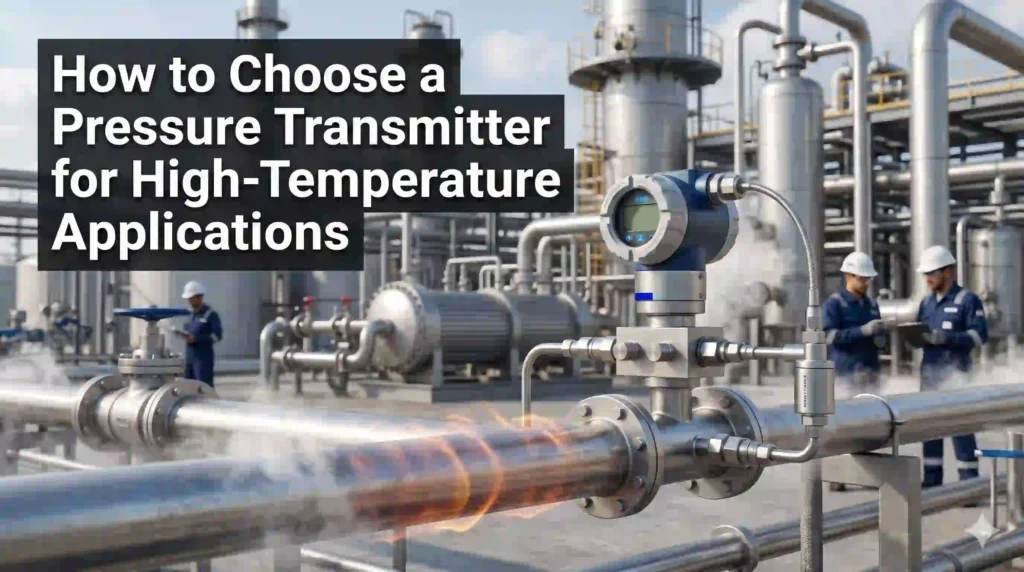
Pressure measurement is a critical part of industrial process control, but it becomes significantly more challenging when operating temperatures rise. Industries such as power generation, chemical processing, oil and gas, pharmaceuticals, and steam systems often expose instrumentation to extreme temperatures that can impact measurement accuracy, equipment reliability, and overall process safety.
High temperatures can cause sensor drift, diaphragm expansion, seal deterioration, and electronic component stress. If the wrong transmitter is selected, facilities may experience inaccurate readings, unexpected downtime, increased maintenance costs, and reduced equipment lifespan.
Understanding How to Choose a Pressure Transmitter for High-Temperature Applications is essential for engineers, plant managers, maintenance teams, and procurement professionals responsible for maintaining reliable process measurements.
This guide explains the key factors to consider, common challenges, recommended features, and practical selection strategies for demanding industrial environments.
What Is a Pressure Transmitter?
A pressure transmitter is an industrial instrument that measures pressure and converts it into a standardized electrical output signal, typically 4–20 mA or a digital communication signal, for monitoring and control systems.
Main Components of a Pressure Transmitter
- Pressure sensing element
- Isolation diaphragm
- Signal conditioning electronics
- Output communication module
- Process connection
Pressure Sensor vs Pressure Transducer vs Pressure Transmitter
| Device | Function |
| Pressure Sensor | Detects pressure changes |
| Pressure Transducer | Converts pressure into an electrical signal |
| Pressure Transmitter | Converts pressure into a standardized industrial output signal |
Common Industrial Applications
Pressure transmitters are widely used in:
- Boilers
- Steam systems
- Refineries
- Water treatment plants
- Chemical processing facilities
- Pharmaceutical manufacturing
- Food and beverage production
- Power generation plants
Why High Temperatures Affect Pressure Measurement
Elevated temperatures can significantly impact measurement performance and instrument reliability.
Key Effects of High Temperatures
- Sensor drift
- Accuracy degradation
- Electronic component stress
- Seal failure
- Diaphragm expansion
- Changes in process fluid characteristics
- Reduced transmitter lifespan
| Temperature Challenge | Impact on Pressure Measurement |
| Sensor Drift | Reduced Accuracy |
| Thermal Expansion | Calibration Errors |
| Electronic Stress | Signal Distortion |
| Seal Damage | Leakage Risk |
| Process Fluid Changes | Measurement Inconsistency |
Without proper protection and transmitter selection, even high-quality instruments may fail prematurely in extreme process environments.
How to Choose a Pressure Transmitter for High-Temperature Applications
Selecting the right device requires evaluating multiple process and environmental factors.
1. Understand the Process Temperature
The first step in understanding How to Choose a Pressure Transmitter for High-Temperature Applications is determining the actual temperature conditions.
Consider:
- Direct process temperature
- Ambient temperature surrounding the transmitter
- Continuous exposure versus intermittent exposure
For example, a steam line operating at 250°C creates very different challenges than a process that briefly reaches peak temperatures during batch operations.
2. Verify Maximum Temperature Ratings
Always review the manufacturer’s temperature specifications.
Key considerations include:
- Maximum process temperature
- Maximum ambient temperature
- Long-term operating limits
- Safety margins
Many transmitters can tolerate short-term temperature spikes but may not withstand continuous exposure at the same temperature.
When evaluating How to Choose a Pressure Transmitter for High-Temperature Applications, selecting equipment with adequate temperature margins improves long-term reliability.
3. Choose the Right Wetted Materials
Material selection is crucial in high-temperature environments.
Common wetted materials include:
SS316 Stainless Steel
- Excellent corrosion resistance
- Suitable for many industrial applications
- Cost-effective option
Hastelloy
- Superior resistance to aggressive chemicals
- Performs well at elevated temperatures
Monel
- Excellent resistance to seawater and corrosive environments
- Suitable for specific chemical processes
Exotic Alloys
For highly demanding applications, specialized alloys may be required to withstand both temperature and corrosion challenges.
Proper material selection prevents premature failure and measurement instability.
4. Consider Remote Diaphragm Seals
Remote diaphragm seals are among the most effective solutions for high-temperature applications.
How They Work
A diaphragm seal isolates the transmitter from the hot process medium using a flexible diaphragm and fill fluid.
Benefits
- Protects sensitive electronics
- Reduces direct heat exposure
- Improves measurement stability
- Extends transmitter lifespan
Common Applications
- Steam systems
- Refineries
- Chemical reactors
- High-temperature process vessels
For many industries, diaphragm seals are essential when considering How to Choose a Pressure Transmitter for High-Temperature Applications.
5. Use Cooling Accessories
Cooling accessories help reduce heat transfer between the process and transmitter.
Common options include:
Syphon Tubes
Widely used in steam applications to create a condensate barrier that protects the transmitter.
Cooling Elements
Reduce process heat before it reaches the sensing element.
Capillary Systems
Allow remote mounting away from heat sources.
Heat Sinks
Dissipate heat and improve thermal protection.
These accessories can significantly improve transmitter reliability in steam and boiler applications.
6. Evaluate Accuracy Requirements
Not every process requires the same level of accuracy.
Consider:
- Accuracy class requirements
- Calibration stability
- Thermal compensation capabilities
- Process criticality
High-performance transmitters often include temperature compensation algorithms that help maintain measurement accuracy despite changing thermal conditions.
7. Check Pressure Range Compatibility
Selecting the correct pressure range is equally important.
Avoid:
- Over-ranging
- Under-ranging
- Excessive safety margins
A properly matched pressure range ensures optimal performance and measurement resolution.
Understanding pressure range compatibility is a critical part of How to Choose a Pressure Transmitter for High-Temperature Applications.
8. Assess Environmental Conditions
Temperature is not the only factor affecting transmitter performance.
Evaluate:
- Outdoor exposure
- Humidity
- Dust
- Corrosive atmospheres
- Vibration
- Hazardous area requirements
A transmitter installed near a refinery furnace may require significantly different protection than one located inside a climate-controlled processing area.
9. Select Appropriate Output Signals
Modern transmitters support multiple communication options.
4–20 mA
The industry standard for reliable analog transmission.
HART
Provides diagnostic and configuration capabilities.
Modbus
Supports digital industrial communication networks.
Advanced Digital Protocols
Enable integration with modern automation and control systems.
Choosing the right communication method improves system visibility and maintenance efficiency.
10. Review Industry Certifications
Certifications help ensure safety and compliance.
Important certifications include:
- ATEX
- IECEx
- SIL
- IP65, IP66, IP67, and IP68 ratings
For hazardous industries, certified equipment is often mandatory.
Recommended Pressure Transmitter Features for High-Temperature Processes
When evaluating How to Choose a Pressure Transmitter for High-Temperature Applications, prioritize the following features:
| Feature | Why It Matters |
| Remote Seal System | Protects Sensor From Heat |
| SS316 Wetted Parts | Corrosion Resistance |
| Temperature Compensation | Accuracy Stability |
| High IP Rating | Environmental Protection |
| Digital Communication | Better Monitoring |
| Overpressure Protection | Increased Reliability |
Common High-Temperature Industrial Applications
Steam Systems
High-pressure steam lines require accurate measurement despite elevated temperatures.
Boilers
Reliable pressure monitoring is essential for operational safety and efficiency.
Refineries
Refining processes often involve extreme temperatures and aggressive media.
Chemical Plants
Pressure transmitters must withstand corrosive chemicals and thermal stress.
Power Plants
Accurate measurements support turbine performance and plant safety.
Pharmaceutical Processing
Temperature-sensitive manufacturing requires precise process control.
Food Processing
High-temperature cleaning and sterilization systems demand reliable instrumentation.
Water Treatment Facilities
Pressure monitoring supports filtration, pumping, and treatment operations.
Mistakes to Avoid When Selecting High-Temperature Pressure Transmitters
Common selection errors include:
- Ignoring ambient temperature conditions
- Choosing incorrect wetted materials
- Not using diaphragm seals when required
- Overlooking calibration requirements
- Selecting based solely on purchase price
- Ignoring maintenance accessibility
- Failing to review certification requirements
- Using insufficient pressure ranges
Avoiding these mistakes can significantly improve system reliability and reduce maintenance costs.
Why Partner with IPS Automation
Selecting the right pressure transmitter often requires application-specific expertise.
IPS Automation supports industrial facilities with:
- Process instrumentation expertise
- Pressure measurement solutions
- Industrial automation support
- Customized application guidance
- Access to globally recognized instrumentation brands
- Technical consultation
- After-sales support
The company works with industries including oil and gas, chemicals, pharmaceuticals, water treatment, power generation, manufacturing, and other process industries to help ensure accurate and reliable measurement performance.
Frequently Asked Questions
1. What temperature can a pressure transmitter withstand?
The allowable temperature depends on the transmitter design and materials. Standard models may handle moderate temperatures, while specialized transmitters with diaphragm seals can operate in much higher temperature environments.
2. Can pressure transmitters be used in steam applications?
Yes. Pressure transmitters are commonly used in steam systems, often with syphon tubes, cooling elements, or remote diaphragm seals to protect the sensing element from excessive heat.
3. What is a diaphragm seal in a pressure transmitter?
A diaphragm seal is an isolation device that separates the transmitter from the process fluid, helping protect the instrument from high temperatures, corrosion, or contamination.
4. How does high temperature affect transmitter accuracy?
High temperatures can cause sensor drift, diaphragm expansion, electronic stress, and calibration shifts, all of which can reduce measurement accuracy.
5. Which material is best for high-temperature pressure measurement?
SS316 is suitable for many applications, while Hastelloy, Monel, and other specialized alloys are often preferred for high-temperature and highly corrosive environments.
Understanding How to Choose a Pressure Transmitter for High-Temperature Applications is essential for maintaining reliable pressure measurement, process safety, and operational efficiency. Factors such as process temperature, material compatibility, diaphragm seals, cooling accessories, pressure range selection, environmental conditions, communication protocols, and certifications all play important roles in transmitter performance.
Choosing the right solution helps reduce downtime, improve measurement accuracy, extend equipment life, and support long-term process reliability.
Need expert guidance on selecting the right pressure transmitter for demanding high-temperature environments?
Contact IPS Automation today to discuss your application requirements and receive professional support for pressure measurement, process instrumentation, and industrial automation solutions tailored to your industry.