

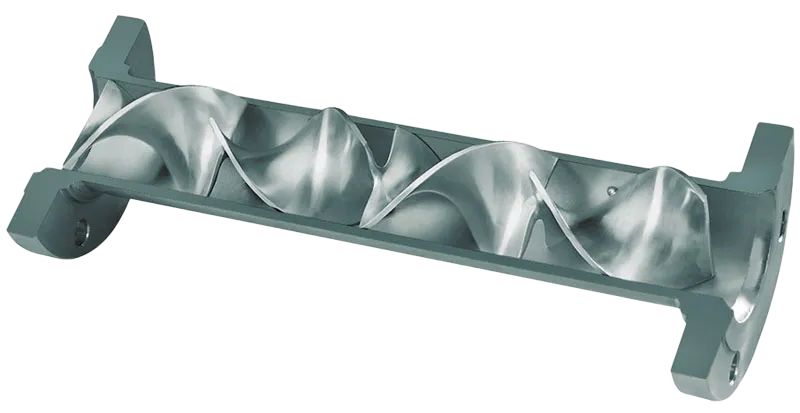
In industries such as chemical processing, water treatment, and food manufacturing, mixing is not just a process—it directly impacts product quality, safety, and operational efficiency. Traditional mixing systems often rely on motors and moving parts, which increase maintenance costs and energy consumption. This is where the static mixer working principle offers a smarter and more sustainable solution.
By using the natural flow of fluids, static mixers eliminate the need for external power while delivering uniform and continuous mixing. This makes them highly reliable in applications where consistency and efficiency are critical.
What Is a Static Mixer?
A static mixer is a stationary device installed inside a pipeline, and its functionality is entirely based on the static mixer working principle, which uses fluid movement to achieve mixing. Inside the mixer, a series of engineered elements are arranged in a specific pattern to manipulate flow direction and velocity.
Key characteristics include:
- Uses fluid velocity instead of mechanical energy
- Performs continuous inline mixing
- Has no moving or rotating components
- Delivers consistent and repeatable results
Because of this design, static mixers are widely used in continuous processing systems where downtime must be minimized.
Static Mixer Working Principle Explained
The static mixer working principle is based on controlled flow division, rotation, and recombination. As fluids move through the pipeline, they interact with internal elements that continuously alter their structure.
Here’s how the process unfolds:
- Flow Division
When fluid enters the mixer, it is split into multiple smaller streams. This increases the surface area between different components, making mixing more effective. - Flow Rotation
The internal elements are designed in helical or angled shapes, forcing the fluid to rotate and change direction. This movement enhances interaction between fluid layers. - Recombination
The divided streams are brought back together in a new arrangement, improving uniformity. - Repeated Mixing
This process repeats across several elements, ensuring that the fluid is thoroughly blended by the time it exits.
This continuous process ensures high-quality mixing without interruptions or external energy input.
Key Mixing Mechanisms
The efficiency of the static mixer working principle is driven by multiple mixing mechanisms that work together to achieve uniform results.
- Laminar Mixing
- Occurs at low flow rates
- Mixing happens through layering and molecular diffusion
- Turbulent Mixing
- Takes place at higher flow velocities
- Provides rapid and aggressive blending
- Radial Mixing
- Moves fluid across the pipe diameter
- Ensures complete mixing throughout the cross-section
These mechanisms allow static mixers to handle a wide range of fluid types and operating conditions.
Technical Specifications of Static Mixers
To fully understand the capabilities of these systems, the static mixer working principle must be supported by strong technical specifications that define performance under different conditions.
Material Options
Static mixers are manufactured using materials that support the static mixer working principle in various industrial environments:
- Stainless Steel
- Hastelloy
- PVC
- PTFE
- PVDF
- Other corrosion-resistant alloys and plastics
These material options ensure:
- High resistance to corrosion
- Compatibility with aggressive chemicals
- Long service life in demanding environments
Operating Temperature
The static mixer working principle remains effective even in extreme thermal conditions, making these mixers suitable for high-temperature processes.
- Suitable for temperatures up to 400°C (752°F)
- Special designs available for even higher temperatures
This makes them ideal for:
- Chemical reactions
- Oil and gas processing
- Industrial heating applications
Operating Pressure
In high-pressure systems, the static mixer working principle continues to deliver consistent performance due to robust design and construction.
- Can withstand pressures up to 150 bar (2175 psi)
- Reinforced models available for higher pressure requirements
This ensures:
- Safe operation in pressurized pipelines
- Reduced risk of equipment failure
- Long-term durability and reliability
Why These Specifications Matter
The true effectiveness of the static mixer working principle depends on how well it aligns with the technical requirements of a specific application. Selecting the right specifications ensures optimal performance and longevity.
Key advantages include:
- Improved mixing efficiency
- Lower maintenance costs
- Enhanced process reliability
- Consistent product quality
For example, choosing corrosion-resistant materials like PTFE or PVDF can significantly extend equipment life in aggressive environments, while proper pressure ratings ensure safe operation in high-demand systems.
Applications Across Industries
The adaptability of the static mixer working principle makes it suitable for a wide range of industries where continuous and efficient mixing is required.
- Chemical Industry
- Mixing reactive substances and compounds
- Water Treatment
- Blending chemicals for purification processes
- Food & Beverage
- Ensuring uniform taste and consistency
- Oil & Gas
- Mixing fuels, additives, and hydrocarbons
- Pharmaceuticals
- Maintaining precise formulations
These applications highlight the versatility and reliability of static mixers in real-world operations.
Conclusion
The static mixer working principle proves that effective engineering does not always require complex machinery. By utilizing the natural movement of fluids, static mixers deliver efficient, continuous, and cost-effective mixing without the need for moving parts.
When combined with robust technical specifications such as:
- High temperature tolerance
- Strong pressure resistance
- Versatile material options
static mixers become a powerful solution for modern industrial challenges.
For businesses aiming to improve operational efficiency while reducing costs, adopting systems based on the static mixer working principle is not just an upgrade—it’s a strategic step toward long-term reliability and performance.