

In the world of industrial operations, success often depends on controlling what you can’t see. One such invisible yet critical factor is pressure. Whether it’s a manufacturing plant, a chemical facility, or a water treatment unit, maintaining the right pressure is essential for safety and efficiency.
This is where a pressure gauge becomes a fundamental tool. It is not just a device—it’s a frontline indicator that helps industries maintain control, prevent failures, and optimize performance.
What is a Pressure Gauge?
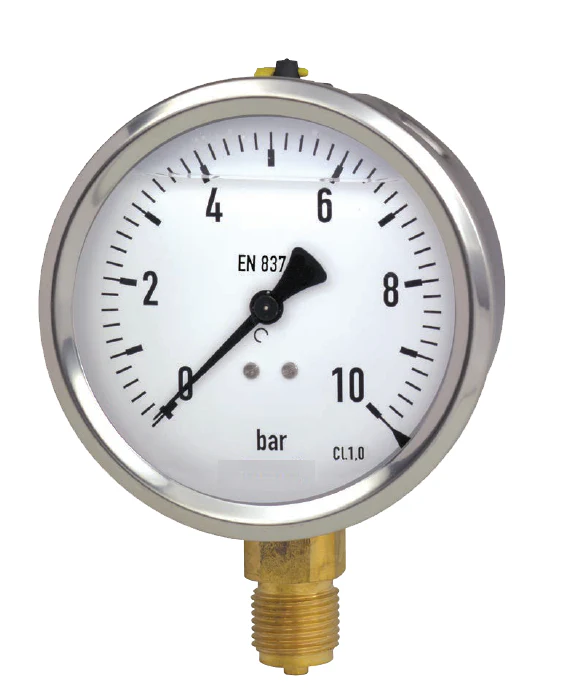
A pressure gauge is a device used for pressure measurement, helping to determine the force exerted by a gas or liquid within a system. It provides real-time readings, allowing operators to monitor whether the system is operating within safe limits.
In simple terms, a pressure gauge answers one critical question:
👉 Is your system running safely or heading toward a problem?
Pressure measurement is typically displayed in units like psi, bar, or pascals, depending on the application.
The Role of Pressure Measurement in Industry
Pressure measurement is a core element of industrial instrumentation, forming the backbone of monitoring and control systems. Without accurate pressure measurement, industries would struggle to maintain consistency and safety.
A pressure gauge plays a key role in:
- Monitoring system performance
- Detecting abnormalities early
- Supporting automation systems
- Ensuring regulatory compliance
In industries where even a slight variation can lead to significant losses, pressure measurement becomes a non-negotiable requirement.
How a Pressure Gauge Works
The working principle of a pressure gauge depends on its type, but most traditional gauges use mechanical components to detect pressure changes.
Bourdon Tube Mechanism
The most common type of pressure gauge operates using a Bourdon tube:
- A curved metal tube reacts to internal pressure
- As pressure increases, the tube tends to straighten
- This movement is transferred to a needle
- The needle displays the reading on a calibrated dial
This mechanism is widely trusted due to its durability and simplicity.
In modern applications, digital systems may combine a pressure gauge with advanced sensors, improving accuracy and enabling integration into automated pressure control systems.
Fluid Pressure Monitoring and Its Importance
In any system involving liquids or gases, fluid pressure monitoring is essential. Without proper monitoring, systems can experience leaks, bursts, or inefficient operation.
A pressure gauge enables continuous fluid pressure monitoring by:
- Providing real-time data
- Alerting operators to pressure fluctuations
- Supporting preventive maintenance
- Enhancing system reliability
For industries such as oil and gas, pharmaceuticals, and food processing, fluid pressure monitoring is critical for both safety and quality control.
Types of Pressure Gauge
Different applications require different types of pressure gauge. Choosing the right one depends on the system requirements and operating conditions.
1. Analog Pressure Gauge
The traditional analog pressure gauge uses a dial and needle. It is cost-effective, reliable, and widely used in industrial environments.
2. Digital Pressure Gauge
A digital pressure gauge provides highly accurate readings and is easier to read. It is ideal for precision-based applications.
3. Differential Pressure Gauge
This type measures the difference between two pressure points, commonly used in filtration and flow systems.
4. Absolute Pressure Gauge
An absolute pressure gauge measures pressure relative to a vacuum, making it suitable for scientific and specialized industrial uses.
5. Vacuum Pressure Gauge
Used for measuring pressure below atmospheric levels, often in laboratory and vacuum systems.
Each pressure gauge type is designed to meet specific operational needs, making proper selection essential.
Pressure Gauge in Pressure Control Systems
A pressure gauge is a vital component in modern pressure control systems. These systems rely on accurate data to regulate pressure automatically and maintain optimal performance.
In pressure control systems, the pressure gauge works alongside controllers and sensors to:
- Maintain consistent pressure levels
- Prevent system overload
- Improve energy efficiency
- Enable automation
Without a reliable pressure gauge, even the most advanced control systems can fail to perform effectively.
Gauge Calibration: Why It Matters
Over time, even the most reliable pressure gauge can lose accuracy. This is where gauge calibration becomes essential.
Gauge calibration ensures that the pressure gauge provides accurate readings by comparing it with a standard reference.
Benefits of Gauge Calibration:
- Improves measurement accuracy
- Ensures compliance with industry standards
- Prevents costly errors
- Enhances system reliability
Regular gauge calibration is a critical practice in industries where precision is key.
Pressure Sensor vs Pressure Gauge
A common question in industrial applications is the difference between a pressure sensor vs pressure gauge.
Pressure Gauge:
- Displays pressure visually
- Used for manual monitoring
- Simple and cost-effective
Pressure Sensor:
- Converts pressure into electrical signals
- Used in automated systems
- Enables remote monitoring and control
In many modern systems, both are used together. While a pressure gauge provides a quick visual check, sensors feed data into automated systems for deeper analysis.
Understanding the difference between pressure sensor vs pressure gauge helps in choosing the right solution for your application.
Applications of Pressure Gauge
A pressure gauge is used across multiple industries, making it one of the most versatile tools in industrial instrumentation.
Key Applications Include:
- Manufacturing and production lines
- Oil and gas pipelines
- Chemical processing plants
- Water treatment facilities
- HVAC systems
- Food and beverage processing
In each application, the pressure gauge ensures that systems operate safely and efficiently.
Choosing the Right Pressure Gauge
Selecting the right pressure gauge involves more than just picking a device. It requires understanding your system’s needs.
Key Factors to Consider:
- Pressure range
- Accuracy requirements
- Environmental conditions
- Material compatibility
- Ease of reading and installation
A well-chosen pressure gauge improves system performance and reduces long-term costs.
Conclusion
A pressure gauge may appear to be a simple instrument, but its role in modern industry is far from basic. From accurate pressure measurement to reliable fluid pressure monitoring, it supports critical operations across multiple sectors.
As part of industrial instrumentation, a pressure gauge plays a key role in maintaining safety, efficiency, and control. Whether integrated into advanced pressure control systems or used for manual monitoring, its importance cannot be overstated.
With proper gauge calibration and a clear understanding of the difference between pressure sensor vs pressure gauge, businesses can ensure accurate readings and better decision-making.
In the end, a pressure gauge is not just about measuring pressure—it’s about maintaining control in environments where precision defines success.