

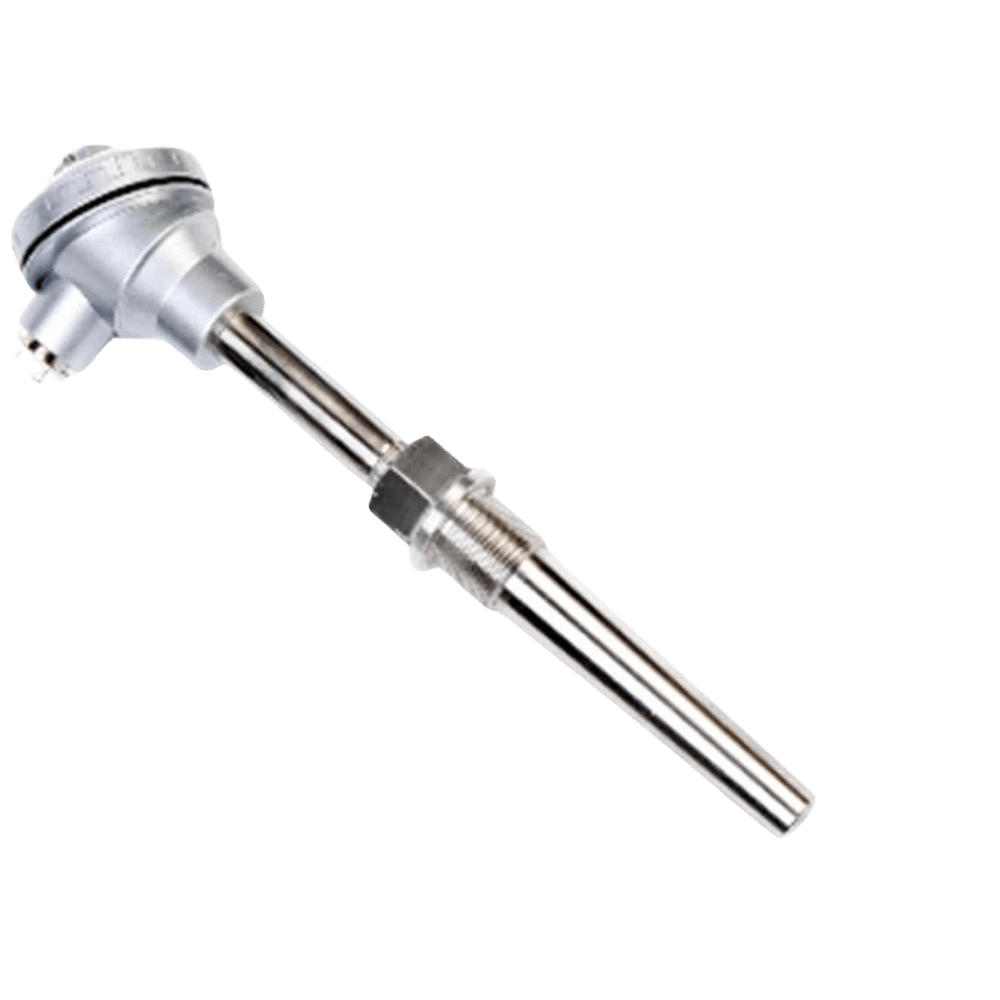
Imagine you’re running a high-precision industrial process—maybe a pharmaceutical plant, a food processing unit, or even a semiconductor facility. In these environments, temperature isn’t just a number; it’s the difference between quality and failure. This is where the Resistance Temperature Detector (RTD) steps in as a silent guardian of accuracy.
Let’s break it down in a simple, practical, and human way.
Understanding the Basics
It is a temperature sensor designed to measure heat by using a simple but powerful principle:
As temperature changes, the electrical resistance of a metal changes.
Instead of guessing or estimating, this sensor relies on measurable physical behavior. The most commonly used metal in a Resistance Temperature Detector is platinum, chosen for its stability and reliability.
How Does a Resistance Temperature Detector Work?
Think of it like a disciplined observer inside your system.
Within a Resistance Temperature Detector, there’s a fine metal element—usually platinum. As temperature rises:
- The atoms vibrate more intensely
- This increased movement resists the flow of electrons
- As a result, electrical resistance increases
When the temperature drops, resistance decreases accordingly.
This change doesn’t stay abstract. A connected device—such as a controller or transmitter—reads the resistance and converts it into an accurate temperature value you can monitor and act on.
Why Platinum is the Preferred Choice
When it comes to building a reliable Resistance Temperature Detector, material selection matters.
Platinum stands out because it offers:
- Exceptional stability over time
- Predictable resistance-to-temperature relationship
- Wide operational range
- High accuracy and repeatability
That’s why industry-standard sensors like Pt100 and Pt1000 are widely used:
- Pt100 → 100 ohms at 0°C
- Pt1000 → 1000 ohms at 0°C
These are essentially calibrated forms of a Resistance Temperature Detector designed for precision applications.
Types of Resistance Temperature Detectors
Different environments demand different designs. A Resistance Temperature Detector can be built in multiple ways:
1. Wire-Wound RTD
- Platinum wire wound around a ceramic core
- Known for high accuracy
- Slightly slower response
2. Thin-Film RTD
- Thin platinum layer on a substrate
- Faster response time
- More cost-effective
3. Coiled Element RTD
- Flexible and vibration-resistant
- Ideal for dynamic industrial setups
Each type of Resistance Temperature Detector is engineered to balance speed, durability, and precision.
RTD vs Thermocouple: A Practical Comparison
In real-world decision-making, choosing the right sensor matters.
| Feature | Resistance Temperature Detector | Thermocouple |
| Accuracy | High | Moderate |
| Temperature Range | Medium | Very High |
| Stability | Excellent | Lower |
| Cost | Higher | Lower |
| Response Time | Slower | Faster |
If your focus is on precision and consistency, a Resistance Temperature Detector is the better fit. For extreme temperatures and rapid response, thermocouples are often preferred.
Where Are Resistance Temperature Detectors Used?
AResistance Temperature Detector is commonly found in environments where accuracy cannot be compromised.
Industrial Applications
- Chemical processing plants
- Oil and gas refineries
- Power generation systems
Food & Beverage Industry
- Maintaining safe cooking and storage temperatures
- Ensuring consistent product quality
Pharmaceutical Industry
- Monitoring sensitive production conditions
HVAC Systems
- Regulating environmental temperatures
Automotive & Aerospace
- Monitoring engine and system performance
Wherever precision matters, a Resistance Temperature Detector quietly does its job in the background.
Advantages of Using a Resistance Temperature Detector
Here’s why industries rely on this sensor:
1. High Accuracy
It delivers precise temperature readings, even in critical environments.
2. Long-Term Stability
A Resistance Temperature Detector maintains its calibration over time.
3. Consistent Performance
It produces repeatable results under the same conditions.
4. Reliable Measurement Range
Suitable for a wide range of industrial temperatures.
Limitations to Keep in Mind
While powerful, a Resistance Temperature Detector does have some limitations:
- Higher initial cost
- Slower response compared to thermocouples
- More delicate in high-vibration conditions
- Limited extreme temperature capability
But in scenarios where precision outweighs speed, it remains the preferred choice.
Wiring Configurations: Small Detail, Big Impact
A Resistance Temperature Detector can be configured in different wiring formats:
2-Wire Configuration
- Simple design
- Less accurate due to lead resistance
3-Wire Configuration
- Most commonly used
- Balances cost and accuracy
4-Wire Configuration
- Highest accuracy
- Eliminates resistance errors completely
For critical applications, engineers often rely on 3-wire or 4-wire setups to maximize the performance of a Resistance Temperature Detector.
The Future of Resistance Temperature Detectors
Today, a Resistance Temperature Detector is no longer just a passive sensor.
With the rise of smart technologies like:
- IoT systems
- Automation platforms
- Smart manufacturing
These sensors are now integrated into intelligent systems that enable:
- Real-time monitoring
- Predictive maintenance
- Data-driven decision-making
This evolution transforms a simple Resistance Temperature Detector into a strategic tool for modern industries.
A Resistance Temperature Detector may seem like a small component, but its role is critical. It ensures processes stay controlled, products maintain quality, and systems operate safely.
At its core:
A Resistance Temperature Detector isn’t just measuring temperature—it’s ensuring trust in every process.
For any industry focused on precision, reliability, and long-term performance, this sensor continues to be an essential part of the system.